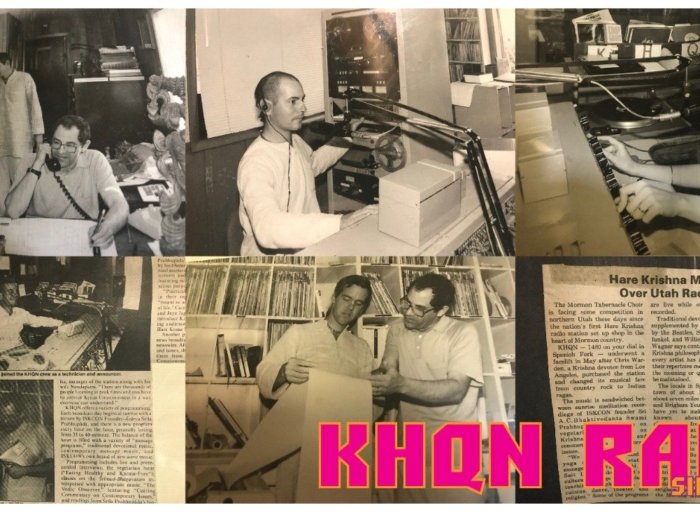
What started as a $225,000 radio station in rural Utah blossomed into one of North America’s most unexpected spiritual hubs. In 1980, longtime ISKCON devotees Charu Das and his wife, Vaibhavi Devi, followed a classified ad from Los Angeles to Spanish Fork—never imagining how radically the land would reshape their lives.
Their dream back then was simple: build a Krishna radio station. What unfolded was anything but simple.
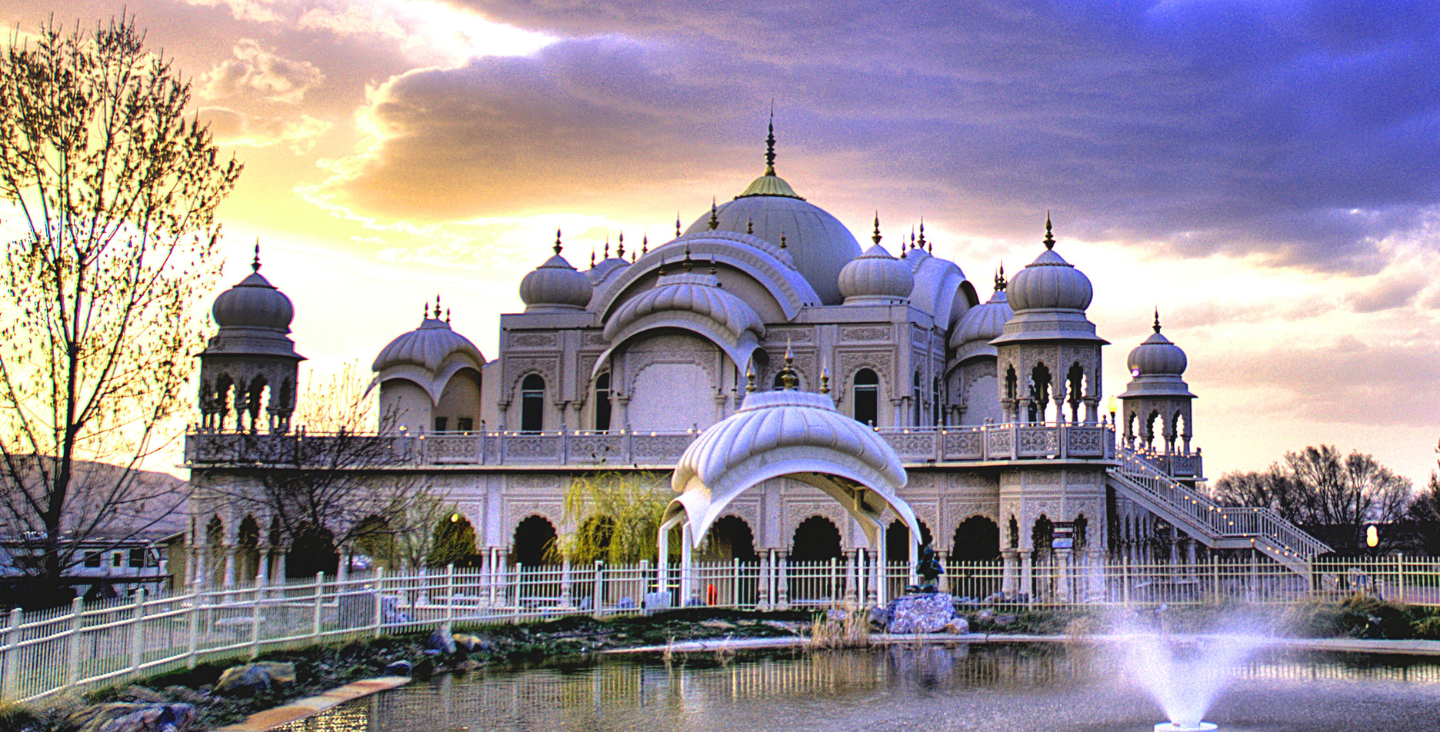
The small plot they purchased—surrounded by rolling hills and framed by the Wasatch Mountains—became the canvas for a 10,000-square-foot northern-Indian–style temple. Domes, ornate arches, peacocks, cows, gardens, and grazing llamas have turned the site into a little slice of Vrindavan in the heart of Mormon country.
None of it was planned. It grew organically from a log house where Sunday services were held, to llama breeding for income, to a full-scale temple whose domes were engineered by an aerospace expert and a potato-storage company. Vaibhavi spent months painted high on scaffolding, turning foam into marble and ceilings into mythological murals. It became a community project too—powered by devotees, local Hindus, and even support from Latter-day Saints.
Today, the Spanish Fork campus hosts 4,000 schoolchildren annually, teaches interfaith harmony, and runs Utah’s massive Festival of Colors, drawing thousands every spring. Das—equal parts priest, rapper, and radio dreamer—still takes the mic to share Krishna’s message, now experimenting with AI-generated music and country jingles for their vegetarian buffet.
The radio station that started it all may have taken a backseat for decades, but it’s come full circle. For Das, returning to radio feels like destiny finally clicking into place.
“This is how we connect,” he says. “This is what Krishna brought us here for.
Based on reporting from the Associated Press.
Credit: Original reporting by the Associated Press by Deepa Bharath.